
About
Strong, confident, proud
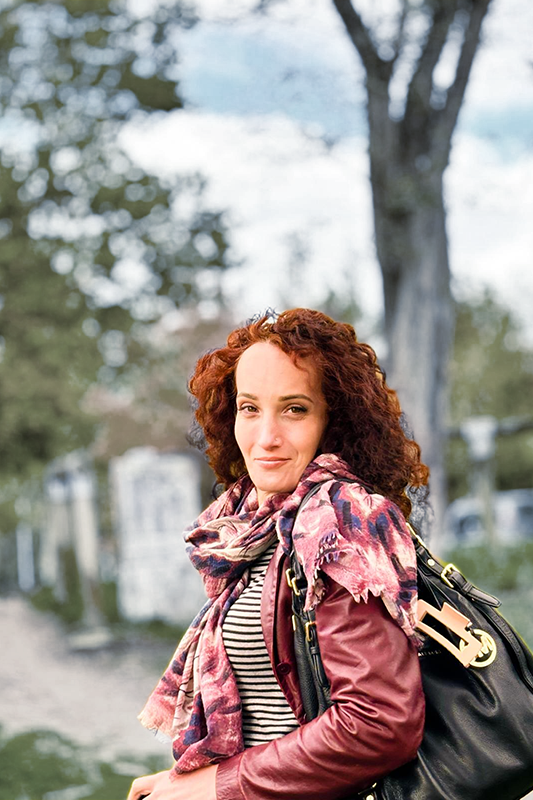
Self-made woman (she/her) who rose from own ashes, with extra sparkle.
To be alive must mean accepting to make mistakes, unburdened and fearlessly. Attempting to do so any other way is accepting death in one form or another, even if it’s only micro-dosed.
Living also means accepting constantly having to rebuild. Sometimes only a few minor maintenance fixes; other times the Phoenix must self-incinerate to be able to rise from her ashes in order to shed the burden that weighed her down, to shine more brightly. And again.
I am Laura, I am fearless, and I rebuild, so I can live authentically.
In my work, “facilitating”, “providing safety net”, “can-do attitude”, and “eye for detail” are guiding principles.
My core values in life are: Spontaneity, Joy, Authenticity, Kindness, Unconditionality, Respect, Patience, Loyalty, and Sincerity. These values are what make me “me”.
On pronouncing my last name
IPA phonetic notation says this: /ˈnɑx.təˌxaːl/
The IPA phonetic symbol [x] represents a voiceless velar fricative that does not occur in English, except for Scottish loch [lox], normally pronounced [lok] in Received Pronunciation or General American. It is also the “j” sound in Spanish, as in José, the “ch” sound in German Kuchen (cake) and the sound of the Cyrillic letter Х. The symbol [x] is the Latin version of the Cyrillic letter. (from https://teflpedia.com/Unvoiced_velar_fricative)
(voiceless velar fricative soundbite) & (voiced velar fricative soundbite)
For people not familiar with the guttural and phlegmy “g” sound in the Dutch language, here are three examples from around the world:
How the Scottish would pronounce their famous lake monster’s name; “Loch Ness”. Not the British “k” version, but the phlegmy one.
How the Spanish of Mexican would pronounce the proper name “Juan”. Not the American “h” sound, but the phlegmy one.
Now, what if I told you it’s actually the different “a” sounds that make my last name tricky? 😉
First, there’s the single “a” (soundbite), and then the double “aa” (soundbite).
Education
As a young child, I (read: my mother) had set my goals on becoming a System Analist, and in order to get there, I was going to finish secondary school and then continue studying Computer Sciences in university. As soon as I got there, I realised this was not my path, and not my passion, about half a year later I bowed out, and reconsidered my future path.
I switched to Social Sciences (focus on Psychology), and actually enjoyed that. I’m pretty sure I’d have enjoyed a career in what I think would ultimately be a mix of sociology, psychology, anthropology, with a distinctly holistic approach, as I realised that “it is all connected”, “there’s more it than what we can see and measure”. That study too, got interrupted, I emigrated for love.
In the mean time I had started working in the live music industry, and there just weren’t many (any?) types of education that were specifially tailored to that type of work.
For my work on stage, I completed “Live Sound Education” in 2021, and in preparation for my counselling & coaching practice, I am doing part-time studies in Clinical & Social Psychology.
Work
I have built a carrer out of working in the live music industry. Most of the time, my job description is Guitar Technician, Tour Manager, or a combination of the two. In 1995, I started this path, and made it my full time job in 2002.
In my role, regardless which it is, I focus on the artist and their performance. I deeply understand that, for them to excel, they need to be empowered and “in the zone”. My work mantra is “providing your safety net”. I extend that to the members in the travelparty by default, not just the musicians.
Before 2002, I’ve done a wide variety of work; the most noteworthy being System Administrator, Junior IT Manager, Digital Video Editor & Studio Assistant, and Web & Graphic Design.
I am in the process of setting up a counselling & coaching practice that can complement – and eventually replace – my work on stage.
Volunteering
I am still not sure which part of volunteer work I enjoy most; I organically gravitate towards the more cerebral and governing roles (with more or less ‘executive’ parts added), in helping others excel. Technically, my paid work is more of the same, but in my volunteer work this shows more clearly, for there not being a clear quid pro quo.
In therapy, I finally discovered why, for most of my life, I seemed to have this innate wish to contribute to, and help facilitate, the greater good, other people’s well-being. The reason isn’t as wholesome as I always thought; it is me having been stuck in “fawn”, one of trauma’s survival modes.
Sport
Playing sports has been on-and-off important in my life. To me, sport is the combination of “sense of community” for it creating a common activity, and “pushing my limits”, in wanting to be better than the last time.
During my formative years I played team sports; Korfball (my mother didn’t want me playing football for it being an aggressive sport), and then football after all.
Neither team sport really filled the “sense of community” bucket; ironically, that only came once I picked up disc golf, an individual sport, in 2010.
9 years later, in 2019, I lifted the biggest trophy to date, the Amateur Disc Golf World Championship title in the Women 40+ division.
After having been sidelined by an injury for over two years, I got back to it in 2025 with European Silver, and National Gold (my third).